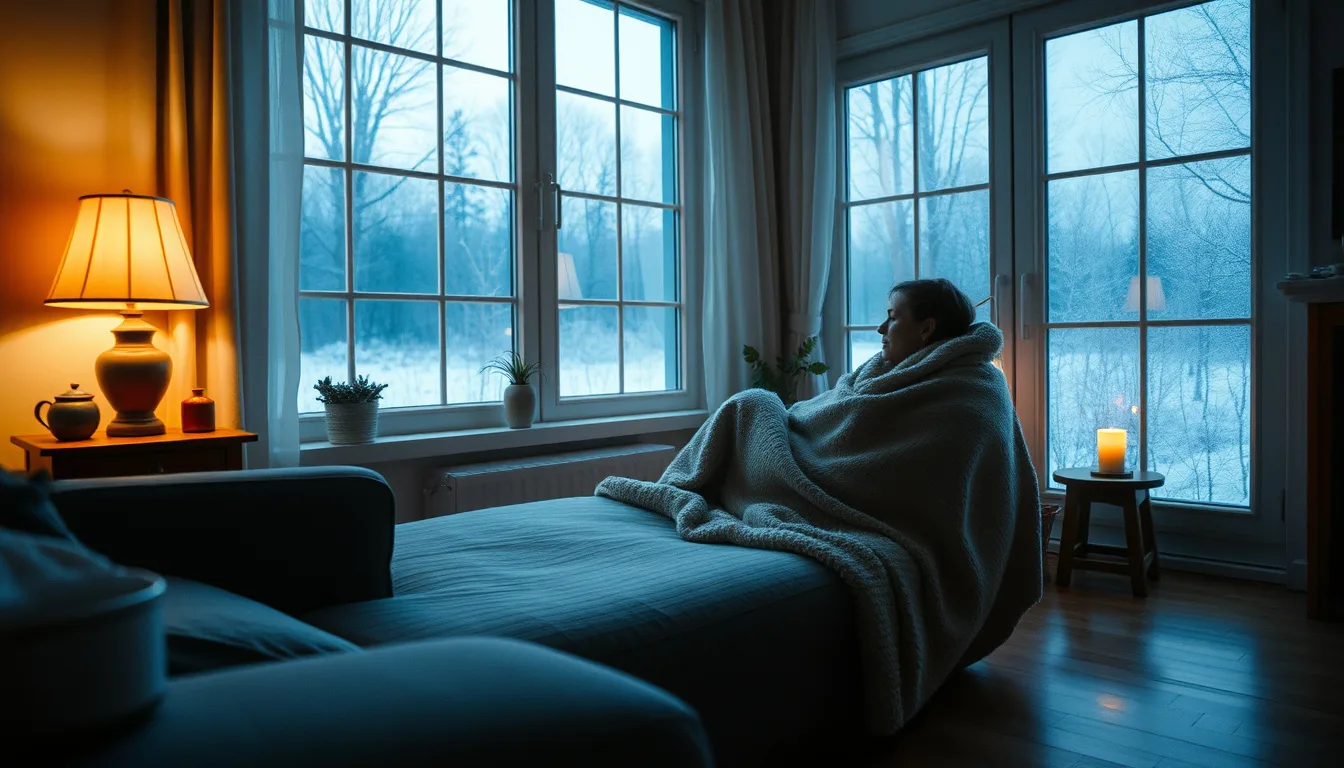
Cold House, Warm Thermostat
Why Is My House So Cold — Even With the Heat Running?
The furnace kicks on, the thermostat says 70, and you're still cold on the couch. That gap between what the thermostat reads and what you actually feel has a specific, findable cause.
The Thermostat Says 70. It Doesn't Feel Like 70.
You've probably already tried the obvious fixes. Turned the heat up a couple of degrees. Layered on a sweater. Maybe plugged in a space heater in the room that never seems to warm up. The furnace is doing its job — it's running, the air coming out of the vents is warm, and the thermostat on the wall reads exactly what you set it to. And yet you're still cold. Your feet are cold on the floor. There's a chill near the windows you can feel from across the room. The wall behind the couch feels cool to the touch even though the air in the room supposedly isn't.
That disconnect — a house that reads warm but doesn't feel warm — is one of the most common comfort complaints homeowners bring to us, and it's rarely random. It's also rarely a sign that you need a bigger furnace. In almost every case, something specific is happening in the walls, floors, or ductwork of your house that a thermostat simply can't see or measure, and that gap between the number on the wall and how the room actually feels is the first real clue to what's going on.
Why "The Thermostat Is Right, but the Room Is Wrong" Happens
A thermostat measures one thing: the temperature of the air around it. It has no idea whether your walls, windows, or floor are cold. But your body doesn't just respond to air temperature — it also responds to radiant temperature, meaning how much heat your skin is losing to the cold surfaces around you. Sit near a cold window or an exterior wall with weak insulation behind it, and that surface pulls heat off your body by radiation, the same way standing near a cold windowpane in a parked car feels chillier than the dashboard thermometer suggests.
That's why a room can measure 70 degrees on a thermostat and still feel cold to the person sitting in it — especially near exterior walls, large windows, or a room over an unheated garage. The air is warm. The surfaces around you aren't. And no amount of turning the thermostat up higher fixes a cold surface problem, because the furnace is heating air, not walls.
The Usual Suspects Behind a House That Won't Hold Heat
Once we rule out a simple air-temperature problem, three causes account for the overwhelming majority of cold-house complaints we see, and they often overlap in the same house.
The first is air leakage — cold outside air finding its way in faster than your furnace can make up for it, through gaps most homeowners never think to check: around recessed lighting, at the attic hatch, where pipes and wiring pass through walls, at the rim joist in the basement. The second is missing or settled insulation — insulation that was adequate decades ago, installed unevenly, or has simply compressed and thinned over the years, leaving your walls and ceiling less able to hold heat than you'd assume from the outside. The third is duct problems — rooms farther from the furnace, or served by leaky or poorly connected ductwork, getting less of their fair share of heated air than rooms closer to the equipment.
Older homes tend to lean toward insulation and leakage causes, since airtightness and insulation standards were far lower decades ago than they are today. Newer homes aren't immune either — duct problems and installation gaps can show up even in construction that's otherwise fairly tight, especially in additions, bonus rooms, or sections of the house built at a different time than the original structure. That's part of why a cold-house complaint in an older home and a cold-house complaint in a newer one can trace back to genuinely different combinations of the same three causes.
- Air leakage — cold air entering faster than the furnace can compensate
- Missing, thin, or settled insulation in walls, attic, or floors
- Duct leaks or imbalance shorting certain rooms of heated air
How We Find Out What's Actually Wrong
Rather than guessing which of those three is at play in your house — or assuming it's all three and throwing money at everything at once — we find out directly. A blower door test uses a calibrated fan temporarily fitted into an exterior doorway to gently depressurize your house, which turns invisible air leaks into something we can actually locate, often with a fog or smoke pencil that shows exactly where outside air is finding its way in.
A thermal camera does something similar for insulation: it reads surface temperature differences across your walls and ceiling that your eyes simply can't see, so a thin or missing patch of insulation shows up as a clear cold zone on camera even though the wall looks completely normal in person. Together, these two checks tell us, room by room, whether your specific cold-house problem is coming from leakage, insulation, ductwork, or some combination — before we recommend anything.
The Fix, Matched to What We Actually Find
Once we know the specific cause, the fix follows directly from it. If leakage is driving the problem, that means targeted air sealing at the gaps the blower door test identified — not blanket caulking everywhere, but sealing the specific penetrations that are actually letting air through. If insulation is thin or missing in specific areas, that means a targeted top-up in those areas rather than a whole-house guess. If ductwork is shorting certain rooms, that means duct repair or balancing so heated air actually reaches where it's supposed to go.
Often a cold house is a combination of two or all three, and the sequence matters — sealing first, then insulating, so warm air isn't finding new gaps around insulation that was just installed.
What It Typically Costs
Cost depends heavily on what the assessment actually finds, which is exactly why we don't quote blind over the phone. A house that needs targeted air sealing in a handful of spots costs meaningfully less than a whole-home insulation top-up combined with duct repair. Home size, the age and condition of existing insulation, and how many separate problem areas turn up during the assessment all factor into the range. We give you a clear, fixed price after we've actually inspected your house — not a rough guess before we know what we're dealing with.
It's common for the assessment to turn up a combination of smaller issues rather than one dramatic problem — a leaky attic hatch here, an undersized duct run there. That's actually good news for your budget, since sealing a handful of specific gaps and topping up insulation in a couple of targeted spots is usually far less expensive than most homeowners assume before they get an actual number in hand.
What Homeowners Notice After the Fix
The most common thing homeowners describe after a cold-house problem is fixed isn't a number — it's a specific spot. No more cold stripe of air near the couch. No more reaching for a blanket in the same chair every evening. Rooms that used to lag behind the rest of the house start holding a steady temperature instead of swinging cold and then overheating when the furnace catches up. Many homeowners also notice the furnace running in shorter, less frequent cycles rather than working constantly to compensate for heat leaking back out as fast as it comes in.
It's not only about temperature, either. Homeowners often mention the house feels quieter, since sealing the same gaps that let cold air in also cuts down on outside noise coming through. Rooms that used to need a space heater running most of the day stop needing one at all — and because the furnace isn't fighting a constant loss of heated air, many homeowners notice it simply runs less across the whole day, not just in the one room that used to be the problem.
Get a Straight Answer About Your House
You don't have to keep guessing at what's making your house cold, and you don't have to accept a bigger heating bill as the price of comfort. We're a nationwide network of home comfort specialists, and a comfort assessment gives you a clear, room-by-room answer for what's actually happening in your house before we recommend a single fix.
Call 844-967-5247 or email josh@contractorschoiceagency.com to schedule a comfort assessment.
Why Is My House So Cold? FAQs
Honest answers, before you book anything
Thermostats measure air temperature, but comfort is also driven by radiant temperature — cold walls, floors, and windows pull heat off your body even in a room with technically warm air. If your walls or windows are cold to the touch, that's often the real story your thermostat can't see.
Usually it's one or a combination of three things: air leakage right at that room, missing or thin insulation specific to that room's location — over a garage, in a bump-out, at the end of a duct run — or a duct system that isn't sending that room its fair share of heated air. We test the room directly rather than guessing.
Cost depends on home size and what we're checking — a focused, single-symptom visit costs less than a full whole-home assessment. We give you a clear price before we start, not a phone guess.
Most homeowners see a real difference, and the size of that difference depends on how leaky or under-insulated the home was to start. A typical home can lose 25–40% of its heating and cooling energy to air leaks alone, according to ENERGY STAR — we'll tell you honestly what to expect for your specific house rather than promising a blanket number.
We walk the house with you and listen to what you're feeling room by room, then use tools like a blower door and thermal camera to find the specific causes. You'll see and understand what we find, not just get handed a report full of numbers.
Tired of that one room that's never comfortable?
Free phone consultation. We'll listen to what you're feeling in the house, then tell you honestly what it will take to fix it.