INSULATION CONTRACTOR & UPGRADES
Rooms That Won't Hold Their Temperature? Why You Might Need an Insulation Upgrade
Rooms that lose their heat fast, floors that stay cold no matter the season, an attic hatch you can feel the cold through — that's usually your house telling you it's under-insulated. As a nationwide insulation contractor, we find exactly where and fix it, room by room.
The Feeling: A House That Won't Hold Its Temperature
It shows up in small, specific ways before it shows up as a number on a bill. The furnace shuts off and a room is noticeably cooler again within the hour. A room that gets full afternoon sun turns into an oven by summer and stays uncomfortably warm well past sunset. Floors feel cold underfoot even when the room reads a normal temperature on the thermostat. If you've ever reached up to close the attic hatch and felt real cold radiating off it, that's not your imagination — that's a house that isn't holding onto conditioned air the way it should.
None of these are dramatic problems on their own, which is exactly why they get lived with for years. But a house that loses temperature quickly, room by room, season after season, is describing a specific and very fixable issue: it isn't insulated the way a comfortable, efficient home needs to be.
Why Insulation Matters More Than People Think
Most homeowners think of insulation as an attic thing. It isn't — it's a whole-house thing. Walls, floors over garages and crawlspaces, and rim joists in the basement all play a real role in whether a house holds its temperature, and any one of them being thin, missing, or compressed can undercut the comfort of the whole home even if the attic looks fine.
Insulation that was considered adequate decades ago often falls well short of what a comfortable, efficient home needs today — building standards and homeowner expectations have both moved. On top of that, insulation installed unevenly during original construction, or that's settled and compressed over the years (fiberglass batts and loose-fill insulation both lose loft and effectiveness over time), quietly underperforms compared to what's actually on the label from day one.
A home doesn't have to be old for this to apply. Additions, bump-outs, and rooms over garages are notorious for getting shortchanged during original construction, since they're framed differently than the main structure and easy to under-insulate without anyone noticing until the room itself starts feeling off. We see this constantly in homes that are otherwise well-built.
Common Insulation Gaps Homeowners Don't Know to Look For
Some of the biggest gaps aren't obvious just from walking through the house, and homeowners often have no idea they exist until we find them:
- Attic insulation that's uneven, thin in spots, or has bare patches where it's been disturbed or never fully covered
- Missing or minimal insulation over garages and bonus rooms, where the framing is often different from the rest of the house and gets overlooked
- Uninsulated rim joists in the basement — the band of framing where the foundation meets the floor structure, a common cold-floor culprit
- Insulation that's been compressed by stored items, foot traffic in the attic, or age, losing much of its original effectiveness
How We Find Out Where You Actually Stand
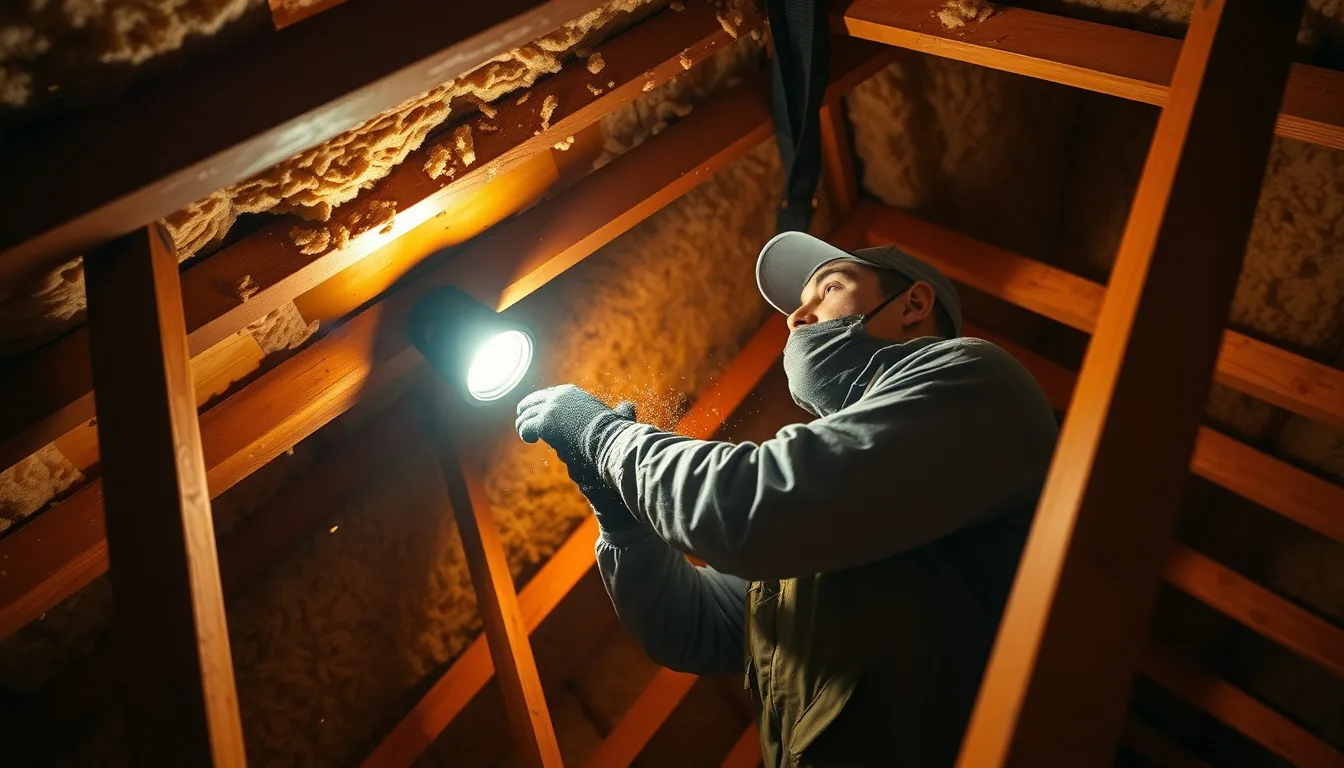
We don't guess at insulation levels from the attic hatch. A proper attic and crawlspace inspection tells us what's actually there versus what should be. A thermal camera scan shows gaps and thin spots that aren't visible to the eye — cold streaks in a ceiling or wall that point directly to where insulation is missing or compressed. And a blower door test checks how your insulation is performing alongside your home's air sealing, because the two genuinely work together: insulation without air sealing underperforms, since moving air carries heat past insulation far more efficiently than insulation alone can resist it.
The result is a clear picture of exactly where your home is falling short, area by area, rather than a blanket recommendation to "add more insulation" without knowing where it's actually needed.
We also check how your attic is ventilated while we're up there, since a well-insulated attic that isn't ventilated correctly can develop its own problems over time. Getting the full picture — insulation depth, air sealing, and ventilation together — is what separates a diagnosis homeowners can actually trust from a quick guess based on a flashlight and a tape measure.
The Fix: Targeted Upgrades, Sequenced the Right Way
The fix depends on what the inspection turns up — sometimes it's a targeted top-up in one or two areas, sometimes it's a fuller re-insulation project across the attic, rim joists, and problem rooms. We sequence the work correctly: seal first, then insulate, so warm conditioned air isn't finding new gaps around insulation that was just installed.
As a full-service insulation contractor, we cover the range of materials and methods a given area calls for — blown-in and batt insulation for attics and walls, rigid board at rim joists, and spray foam insulation where it's the right fit, particularly in tight cavities, rim joists, and areas where an air barrier and insulation in one step makes sense. We'll tell you plainly which material fits your specific situation rather than defaulting to whichever one is easiest to install.
Sequencing matters just as much as the material. Adding insulation on top of unsealed gaps traps the problem rather than solving it, since air can still move through the space around and beneath the new material. Sealing first, then insulating over a properly air-sealed surface, is the order that actually delivers the comfort improvement homeowners are expecting.
Cost by Area and Scope
Insulation cost is driven by area and scope more than anything else — a targeted attic top-up costs meaningfully less than a full re-insulation across attic, walls, and rim joists. Spray foam insulation generally runs higher per square foot than blown-in or batt insulation but can be the right call in cavities where an air barrier matters as much as the R-value. Every quote follows an actual inspection of your home, not a phone estimate, because the honest price depends on how much area needs work and what condition it's currently in.
Homes that only need a modest top-up over existing, still-serviceable insulation land at the lower end of that range; homes with bare attic joists, uninsulated rim joists, and one or two problem rooms cost more simply because there's more square footage and more material involved. We break the number down area by area so you can see exactly what's driving the total.
What Changes Afterward
Homeowners consistently describe the same shift after a properly diagnosed and sequenced insulation upgrade: rooms hold their temperature longer between heating or cooling cycles, the furnace and air conditioner run less to maintain the same comfort, and the cold-floor, cold-ceiling feeling that used to define certain rooms goes away. Air leakage alone is estimated to account for 25 to 40 percent of the energy used for heating and cooling in a typical home, per ENERGY STAR, and the EPA estimates that sealing and adding insulation together can save an average of around 15 percent on heating and cooling costs — about 11 percent of total energy costs — in a typical home. Your specific results depend on your home's starting condition, but that's the scale of difference proper insulation and sealing work together can make.
A Nationwide Insulation Contractor You Can Actually Trust
Searching for an insulation contractor near you usually starts with the same frustration homeowners bring to us: rooms that don't feel right, and no clear sense of whether a company is going to actually diagnose the problem or just quote a number over the phone. We're a nationwide insulation company built around finding out exactly where your home is falling short before recommending any fix — attic, walls, floors, rim joists, or spray foam insulation, whichever the diagnosis actually points to.
Call 844-967-5247 or email josh@contractorschoiceagency.com to schedule an insulation assessment. We'll walk your attic and crawlspace, show you what we find, and give you a clear, honest, area-by-area plan.
Insulation Contractor & Upgrades FAQs
Honest answers, before you book anything
Common signs are rooms that lose their temperature quickly after the heat or AC shuts off, cold ceilings or floors, an attic hatch that's cold to the touch, and insulation that looks thin, uneven, or has bare patches when viewed in the attic. A proper inspection with a thermal camera confirms exactly where and how much is missing.
Cost is driven mainly by square footage and how much insulation needs to be added — a top-up over existing insulation is less expensive than starting from bare joists, and we'll give you an exact number after inspecting your attic.
Yes — spray foam insulation is one of the materials we use, particularly in tight cavities and rim joists where an air barrier and insulation in one step is the right fit. We'll recommend it specifically when the diagnosis points there, not as a default.
Most homeowners see a real difference, but the size depends on how under-insulated the home was to start. The EPA estimates that sealing and insulating together can save an average of around 15 percent on heating and cooling costs in a typical home — we'll tell you honestly what to expect for your specific house.
Often yes — federal and local incentive programs exist for qualifying insulation work, and we can point you toward what may apply to your project. The specifics depend on your location and the scope of work.
Tired of that one room that's never comfortable?
Free phone consultation. We'll listen to what you're feeling in the house, then tell you honestly what it will take to fix it.