Ice Dams, Real Cause
Ice Dams Forming on Your Roof Every Winter? Here's the Real Cause (and the Real Fix)
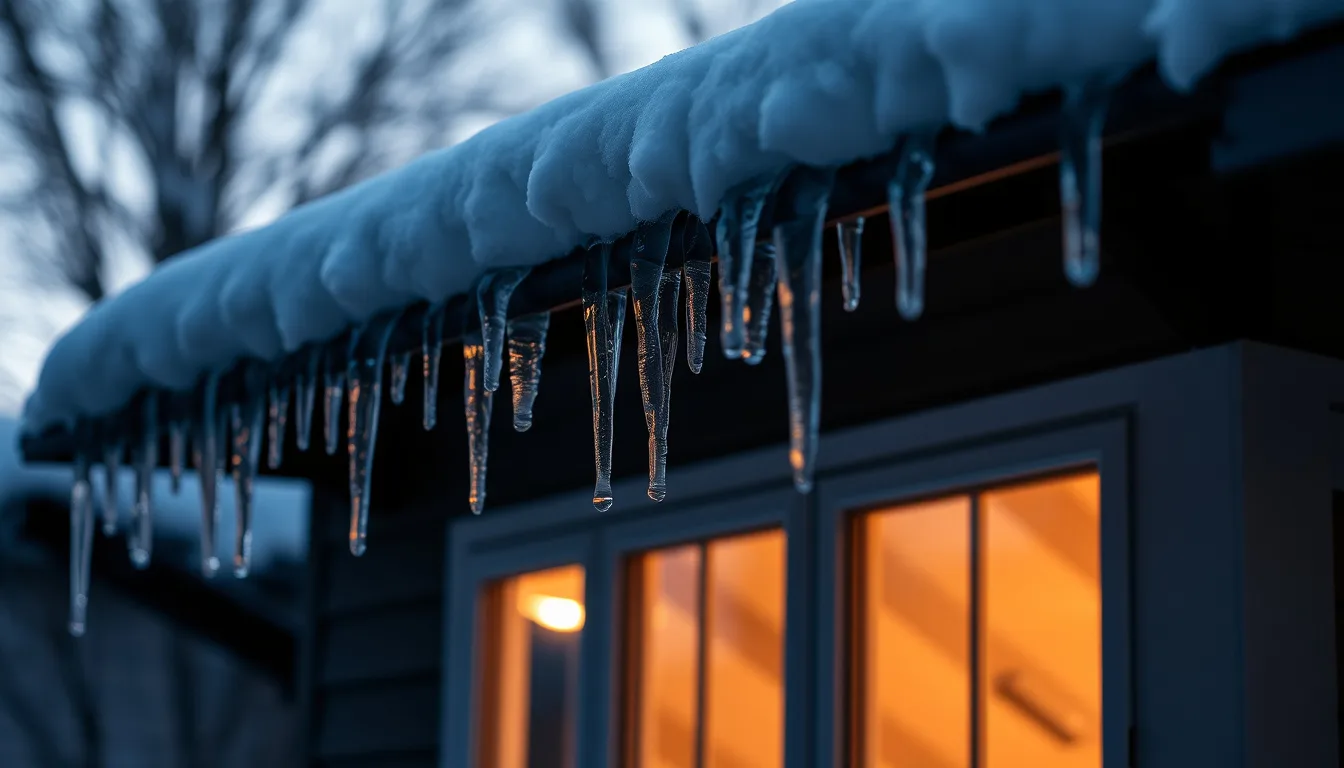
A ridge of ice building up along your roof edge, icicles hanging heavy off the gutter, maybe a water stain creeping across a ceiling below. It happens again every winter — and it's not because of the weather alone.
The Sight Every Winter: Ice Building Up at the Roof Edge
You know the look. Snow blankets the roof after a storm, and within a few days a ridge of ice starts forming right along the edge, above the gutter — thicker some winters than others, but never really absent. Icicles hang heavy off the eave, sometimes long enough to reach the ground. In the worst years, a water stain creeps across a ceiling somewhere in the house, or you notice a damp patch near an exterior wall upstairs that wasn't there before the thaw.
It happens again almost every winter, on a predictable schedule, and it can feel like something you just have to live with in a cold climate. It isn't. Ice dams have a specific, well-understood physical cause, and once that cause is addressed, the ridge that forms at your roof edge every winter stops forming the way it used to.
It's easy to assume every house in a cold climate deals with this to some degree, and that yours just happens to get it worse. In practice, two houses on the same street, facing the same weather, can have very different ice-dam patterns — the difference usually comes down to how much heat each house is losing into its own attic, not the weather outside either one of them.
Why It Happens — the Real Mechanism, Explained Simply
An ice dam forms through a repeating cycle, and every step of it starts inside your house, not on your roof. Heat from your living space escapes upward into the attic — through gaps around light fixtures, the attic hatch, plumbing stacks, and places where insulation is thin or missing. That escaped heat warms the underside of the roof deck from below, which melts the bottom layer of snow sitting on the roof, even while the air temperature outside stays well below freezing.
That meltwater runs down the slope of the roof under the snow, following gravity, until it reaches the roof's overhang — the part that extends past the exterior wall and sits outside the warm, conditioned part of the house. That overhang has no heat rising up beneath it, so it stays at the outdoor air temperature. When the meltwater reaches that cold edge, it refreezes. The next warm spell repeats the cycle, and the ice ridge grows a little more each time, eventually building up enough to dam water behind it — water that can back up under the shingles and work its way into the roof deck and, from there, into the house.
Why This Is an Attic Problem, Not a Gutter or Roofing Problem
The natural instinct, once ice starts forming at the edge, is to think about the roof or the gutters — clean them out, call a roofer, assume something about the shingles or the drainage is at fault. In the overwhelming majority of cases, the roofing and gutters aren't the actual cause. The cause is upstream of the roof entirely: heat escaping from the living space into the attic and warming the roof deck unevenly, so the upper part of the roof stays warm enough to melt snow while the unheated overhang stays cold enough to refreeze it.
A roof and gutters in perfect condition will still develop ice dams every winter if the attic underneath them is losing heat the way an under-sealed, under-insulated attic typically does. That's why addressing the roof or gutters alone, without fixing the attic heat loss driving the cycle, tends to bring the same ice ridge back the following winter.
How We Find Out What's Letting Heat Escape
We start with a full attic inspection, looking at insulation depth and how evenly it's spread across the whole attic floor, not just a spot check near the hatch. A thermal camera scan from inside the attic — and sometimes from inside the rooms below it — shows exactly where warm air is escaping into the attic space, since those spots read as distinctly warmer than the surrounding roof deck or ceiling, even when nothing looks unusual by eye.
A blower door test, run from the living space, helps pinpoint the specific attic bypasses driving the heat loss — the gaps around recessed lighting, electrical and plumbing penetrations, chases, the attic hatch, and top plates where interior walls meet the attic floor. Together, these tell us exactly where your specific attic is leaking heat, rather than guessing at a general insulation top-up and hoping it's enough.
The Fix: Seal First, Then Insulate, Then Confirm Ventilation
The fix follows the diagnosis directly. First, we air seal the attic floor at every bypass the inspection identified, stopping warm air from ever reaching the attic in the first place — this is the step that actually interrupts the melt-and-refreeze cycle at its source. Second, we top up attic insulation to an appropriate depth across the full attic floor, evening it out so there are no thin spots left for heat to concentrate through.
Third, we confirm your attic has adequate ventilation, so that even the small, unavoidable amount of heat that reaches the attic gets carried away by airflow rather than pooling under the roof deck — keeping the whole underside of the roof at a more uniform, cold temperature rather than warm in some spots and cold in others.
What It Typically Costs
Cost depends mainly on your attic's square footage, how much air sealing the bypasses require, and how much insulation needs to be added to reach an appropriate depth across the whole attic. A home with a straightforward attic and moderate insulation gaps typically costs less to address than one with extensive bypasses or very little existing insulation. We give you a clear, fixed price after inspecting your specific attic, not a guess based on square footage alone.
It's worth knowing that this work is, in most cases, the same air sealing and insulation upgrade that also helps with a cold house, high heating bills, and uneven room temperatures. An attic project aimed at stopping ice dams often improves comfort and lowers heating costs elsewhere in the house at the same time, rather than being a single-purpose expense.
Why This Is a Fix-Before-Next-Winter Project, Not an Emergency
The best time to address the attic cause behind ice dams is the off-season — spring, summer, or fall — when the attic is easy to access and work in, and there's no active ice or snow load to work around. Waiting until the middle of winter, with ice already forming, makes the underlying attic work harder and more limited in what can safely be done at that time of year.
If you're dealing with active ice buildup on your roof right now, that's a separate, more time-sensitive situation from the attic fix — but the attic work is what stops the same ridge from forming again next winter, and it's worth scheduling well before the cold weather returns.
Stop the Ice Ridge From Coming Back
You shouldn't have to watch the same ice ridge build up along your roof edge every single winter. We're a nationwide network of home comfort specialists, and an attic assessment tells you exactly where heat is escaping into your attic and driving the ice dam cycle — before we recommend a single fix.
Call 844-967-5247 or email josh@contractorschoiceagency.com to schedule an attic assessment.
Ice Dam Prevention FAQs
Honest answers, before you book anything
Heat escaping from your living space into the attic warms the roof deck and melts the snow sitting on it. That meltwater runs down to the cold, unheated eave overhang and refreezes there, building an ice ridge over the course of the winter. It's an attic heat-loss problem, not a gutter or roofing problem.
Yes — the lasting fix is addressing the attic heat loss that causes them: air sealing the attic floor at the specific gaps letting warm air escape, topping up insulation to an even depth across the whole attic, and confirming the attic has adequate ventilation. Roofing or gutter work alone doesn't address the actual cause.
In most cases, the roof and gutters aren't the actual cause — the cause is heat escaping from the house into the attic and warming the roof deck unevenly. A roof and gutters in perfect condition will still form ice dams every winter if the attic underneath is losing heat.
The attic work is best done in the off-season — spring, summer, or fall — when the attic is easiest to access and there's no snow or ice load to work around. It's worth scheduling before the cold weather returns rather than waiting until ice is already forming.
We inspect the whole attic for insulation depth and how evenly it's spread, use a thermal camera to see exactly where warm air is escaping into the attic space, and run a blower door test to pinpoint the specific bypasses — around lighting, plumbing, wiring, and the attic hatch — that are driving the heat loss.
Tired of that one room that's never comfortable?
Free phone consultation. We'll listen to what you're feeling in the house, then tell you honestly what it will take to fix it.