Ice Dams 101: Why They Form, What They Damage, and How to Actually Stop Them
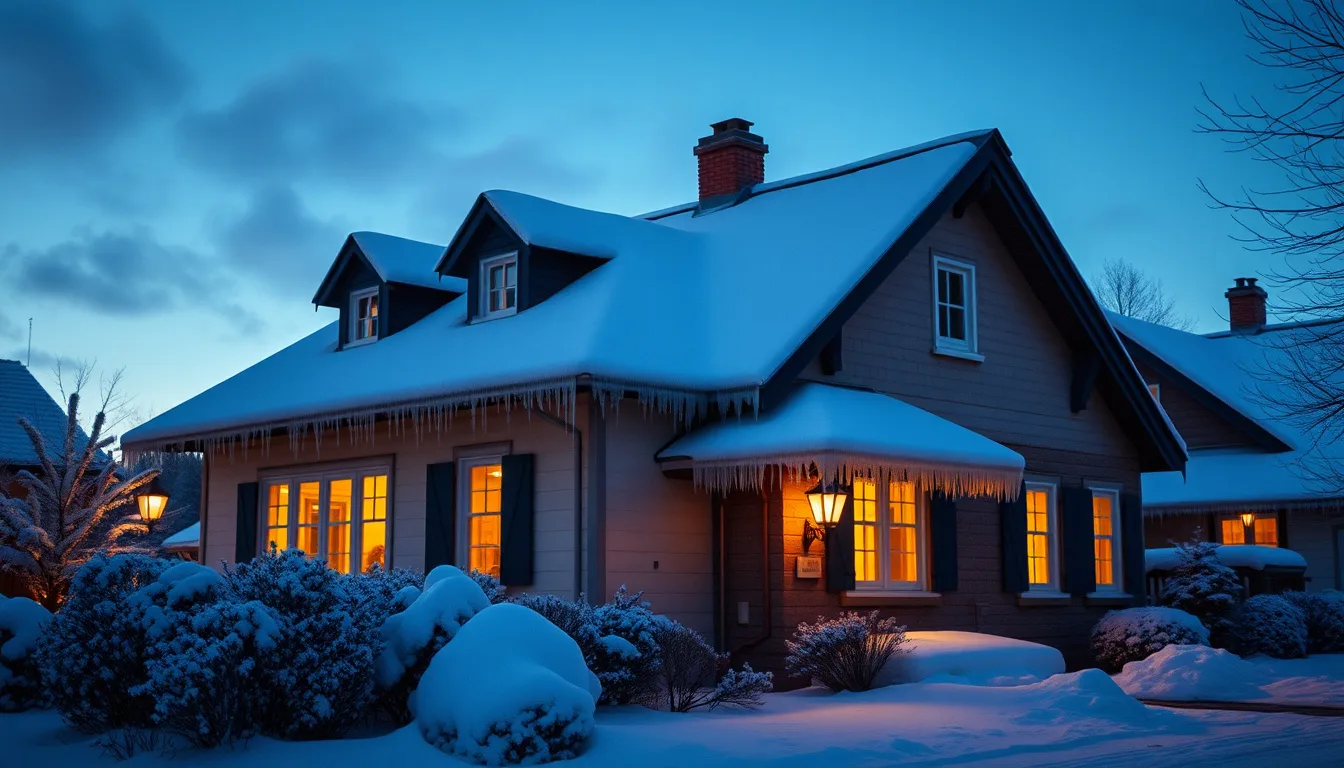
Every winter, the same ridge of ice shows up along the same stretch of roofline. It starts as a thin edge, thickens over a few cold weeks, and by February there are icicles hanging off the gutter that look impressive right up until you notice the water stain creeping across the ceiling underneath. If this sounds familiar, you've probably already tried the obvious fixes — cleaned the gutters, maybe had someone rake the snow off the roof — and watched the ice come back anyway the next year. That's because gutters and roof snow were never the actual cause. The real problem is happening one floor down, in your attic, and it starts with heat you didn't know you were losing.
What's Actually Happening on Your Roof
An ice dam isn't caused by cold weather by itself. It's caused by an uneven roof temperature — part of your roof staying warm enough to melt snow while the rest stays cold enough to refreeze that meltwater — and that unevenness comes from heat escaping your living space into the attic above it.
Here's the sequence, step by step:
- Heat from inside your house rises and finds its way into the attic — through gaps around recessed lights, the attic hatch, plumbing and wiring penetrations, and insufficient insulation generally
- That escaped heat warms the underside of the roof deck from below, even though the outside air is well below freezing
- The warmed roof deck melts the bottom layer of snow sitting directly on top of it, while the rest of that snow layer stays frozen
- The meltwater runs downhill under the snow until it reaches the eave — the overhang beyond your exterior walls, which isn't warmed by attic heat because there's no conditioned space underneath it
- At that cold eave, the water refreezes, because there's no heat source keeping it liquid anymore
- Ice builds there, day after day, snow after snow, until it forms a dam — a ridge of solid ice sitting right at the edge of your roof
Once that ridge is thick enough, it starts doing something roofing wasn't designed to handle: holding water in place. Shingles are built to shed water that's actively running downhill, not to hold back a pool of water sitting still behind an ice ridge. When meltwater backs up behind the dam instead of draining off the edge, it can work its way under the shingles and into the roof deck — which is how a rooftop ice problem turns into a ceiling stain or a wet spot in the attic insulation.
This exact mechanism — attic heat loss, uneven roof-surface temperature, melt-and-refreeze at the cold eave — is well documented in building-science research, including a widely cited technical digest from the Building Science Corporation and guidance published through the U.S. Department of Energy's Building America program. It's not a mystery and it's not bad luck. It's physics, and it happens in a predictable, specific spot: right where the warm part of your roof meets the cold part.
Two houses sitting side by side, in the exact same snowstorm, can end up with very different amounts of ice at the eave. The difference isn't the weather — it's how much heat each attic is losing and how evenly each roof deck holds its temperature. A tightly sealed, well-insulated attic keeps the whole roof deck close to outdoor air temperature, so there's no warm patch to start the melt cycle in the first place. A leaky, thinly insulated attic gives that warm patch plenty of fuel, storm after storm, all winter long.
Why the Ice Ridge Keeps Growing, Not Just Forming Once
It's worth understanding why this isn't a one-time event. Every fresh snowfall adds another layer for the same cycle to work through — attic heat warms the deck, that layer melts from underneath, the meltwater runs down and refreezes at the same cold eave, and the ridge gets a little thicker. A single snowstorm rarely produces a serious ice dam on its own. It's the repetition over a whole winter, sometimes with a partial midwinter thaw and refreeze thrown in, that turns a thin edge of ice in December into a heavy ridge by February. That's also why a "fix" that only addresses this year's ice — chipping it off, raking the roof clean — does nothing to stop next month's snowfall from starting the exact same process over again.
Why It's an Attic Problem, Not a Gutter or Roofing Problem
This is the part that trips up most homeowners, because the instinct when you see ice at the roof edge is to blame the roof edge. Clean the gutters. Call a roofer. Maybe have someone rake the snow off before it can melt at all.
None of those touch the actual cause.
Clean gutters can still ice over — a gutter isn't creating the meltwater, it's just where the meltwater ends up. A brand-new roof will form the exact same ice dam as an old one if the attic underneath it is losing heat the same way, because shingles don't control roof-deck temperature, insulation and air sealing do. And snow raking, while sometimes a reasonable short-term move during an active thaw-and-refreeze stretch, removes the snow that would have melted — it doesn't stop your attic from losing heat, so the moment more snow falls, the same cycle starts again.
The roof edge is where the damage shows up. The attic is where the problem actually lives. Fixing the roof edge without touching the attic is like mopping up a leak without turning off the faucet — it buys you a little time and nothing more.
The Fix: Air Sealing and Insulation, Not a Roofing Project
Because the cause is heat escaping into the attic, the fix is stopping that heat from getting there in the first place — and keeping the small amount that does get through moving out safely rather than pooling under the roof deck. That comes down to two things working together.
Air sealing the attic floor. Warm air doesn't just soak through insulation — it moves through gaps, and there are more of them in a typical attic floor than most homeowners realize: around recessed light housings, at the attic hatch or pull-down stairs, where plumbing stacks and electrical wiring pass through the ceiling, at interior wall top plates, and around chimney chases. Sealing these bypasses stops warm air from ever reaching the attic in the first place, which is the single biggest lever for keeping the roof deck uniformly cold.
Bringing attic insulation up to an adequate depth. Insulation slows down the heat that does try to move upward by conduction, on top of what air sealing stops from moving by airflow. A lot of attics were insulated correctly for the standards of decades ago, or have settled and thinned out over time, or have visibly uneven depth with bare or thin spots — any of which lets more heat reach the roof deck than the attic was ever supposed to allow.
The two work together, not separately: air sealing without adequate insulation still lets heat conduct through, and insulation without air sealing still lets warm, moist air leak straight past it. Getting the sequence right matters too — sealing the bypasses first, then insulating over the top, so the new insulation isn't sitting on top of gaps that are still leaking warm air into it.
A properly sealed and insulated attic keeps the roof deck close to outdoor air temperature all the way from the ridge to the eave. No warm patch, no meltwater, no ice ridge forming at the edge — because there's no longer a temperature difference across the roof surface to drive the cycle in the first place.
One thing worth saying plainly: adequate attic ventilation still matters alongside air sealing and insulation, since ventilation helps keep the roof deck at outdoor temperature and lets any residual moisture escape rather than getting trapped. A good attic assessment looks at sealing, insulation, and ventilation together, not just one piece in isolation.
When to Act — and Why Mid-Winter Isn't the Right Time
The attic fix is not a mid-storm emergency project, and honestly, mid-winter is close to the worst time to attempt it. Air sealing and insulation work in an attic that's actively cold, snow-loaded, and possibly wet from an existing ice dam is harder to do well and less pleasant for everyone involved.
The right window is spring through fall — after the snow's gone and before the next cold season starts. That gives plenty of time to seal and insulate properly, and to have it fully in place well before the first hard freeze puts it to the test.
If you're dealing with an active ice dam right now, in the middle of winter, that's a different, more immediate situation than the attic fix — and it's worth treating carefully rather than climbing onto a snow- and ice-covered roof yourself. Once the season turns, that's the time to address the underlying attic heat loss so the same ridge doesn't just build back up next year.
What to Watch For
A little bit of ice at the roof edge most winters is common and not automatically a five-alarm problem. A few signs are worth taking seriously enough to get the attic looked at before the next freeze:
- Ice dams that come back bigger or in the same spot year after year, rather than a one-off from an unusually snowy season
- Water stains on a ceiling or along an exterior wall that show up during or right after a thaw
- Visible moisture, staining, or a musty smell in the attic itself, especially near the eaves
- Icicles that are growing noticeably thicker and longer through the season rather than staying modest
Any of those point to meltwater actively backing up under the roofing rather than just sitting harmlessly at the gutter line — and that's exactly the kind of ongoing water exposure that's worth heading off with an attic fix before it has another winter to work on your roof deck and ceiling.
It's also worth knowing what an ice dam is not automatically a sign of. A modest edge of ice after a heavy snow, on its own, doesn't necessarily mean anything is wrong with your house — plenty of homes get some ice at the eave in a hard winter without any lasting issue. The signals above are about pattern and progression: is it getting worse year over year, and is there any evidence water is finding its way past the roofing rather than just sitting on top of it. That distinction is what separates "worth keeping an eye on" from "worth having your attic looked at this year."
Stop Treating the Roof Edge and Start Treating the Attic
Ice dams look like a roof problem because that's where you can see them, but the actual cause is heat escaping into your attic — and that means the actual fix is air sealing and insulation, not another round of gutter cleaning or roof raking. A proper attic assessment finds exactly where your house is losing heat and brings your insulation up to where it needs to be, so the ice ridge that's shown up every winter for years finally stops forming.
Call 844-967-5247 to schedule an attic assessment before the next winter puts your roof to the test again.
Want to know what's really going on in your house?
Free comfort assessments, nationwide — we listen first, then explain what we find in plain English.